

Measuring Social Media Success: Key Metrics and Analytics to Track
In today’s digital-first world, social media isn’t just a marketing tool—it’s a powerful data hub. Whether you’re running campaigns on Instagram, LinkedIn, or Facebook, understanding what’s working (and what’s not) begins with effective social media analytics.
Why Metrics Matter?
Success on social platforms isn’t about vanity numbers; it’s about meaningful impact. Metrics and analytics allow brands to track their goals, understand audience behavior, and pivot strategies when needed. Without clear performance measurement strategies, efforts can easily become misaligned with outcomes.
Key Social Media KPIs to Track
To effectively analyze social media performance, here are the key KPIs (Key Performance Indicators) you should focus on:
- Engagement Rate: This includes likes, shares, comments, and saves. High engagement indicates content relevance and audience interest.
- Reach and Impressions: These tell you how many people saw your content and how often. It’s a crucial step in brand awareness tracking.
- Click-Through Rate (CTR): Shows how compelling your posts are in driving traffic to your website or landing page.
- Follower Growth Rate: More than just numbers—are you attracting quality followers who engage?
- Conversion Rate: Measures how well your social media is contributing to goals such as signups, downloads, or sales.
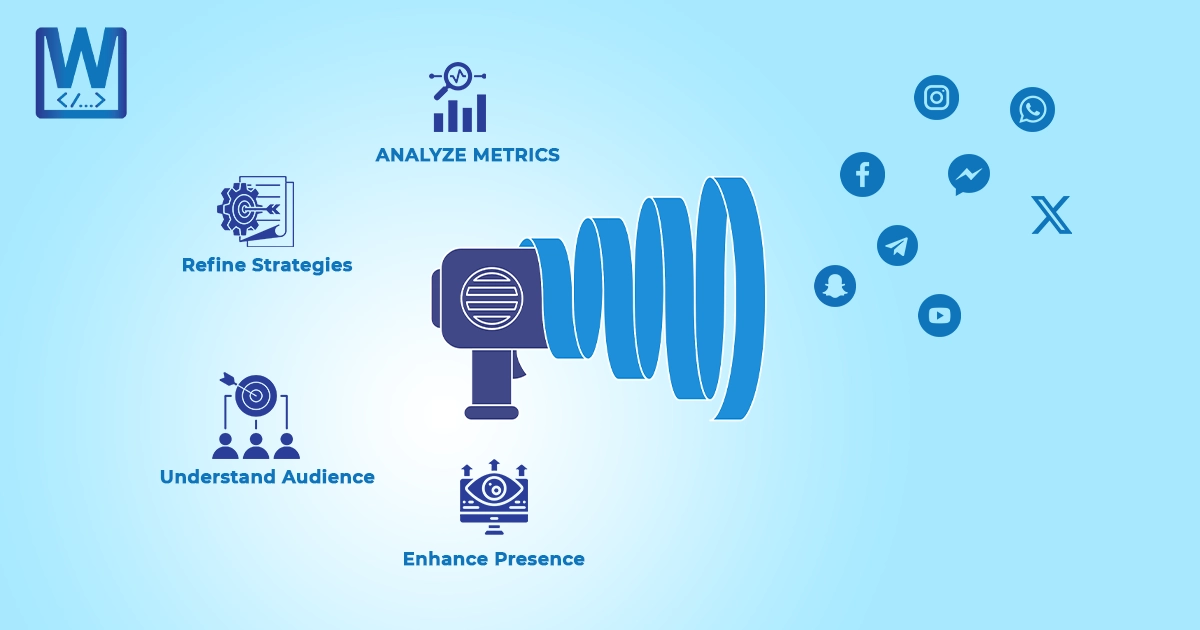
How to Analyze Social Media Performance for Better Results?
- Tools for Better Social Media Insights
There are many tools available that help track and report your metrics in real-time. Google Analytics, Meta Business Suite, Hootsuite, and Buffer are just a few platforms that offer robust social media insights. These tools simplify data collection and allow you to draw actionable conclusions.
- Improve Performance with Analytics
Once you’ve tracked the right metrics, the next step is optimization. Identify high-performing content and replicate its structure or messaging. If something isn’t working, test variations—different formats, captions, or posting times.
Consider investing in professional services like Web Hosting and Maintenance to ensure your landing pages (where your social traffic lands) are optimized, fast, and responsive. Additionally, combining organic efforts with paid Google Ads campaigns can help boost your results and offer richer data for cross-platform analysis.
- Reporting and Strategy Refinement
Create monthly or quarterly performance reports. Compare your results to past periods and to your competitors. This will help you adjust your performance tracking goals and make data-informed decisions for future campaigns.
Tracking social media KPIs and evaluating the right engagement metrics can significantly enhance your marketing strategy. With consistent monitoring, insightful tools, and optimization based on real-time data, your brand can move from guesswork to growth.
Unlock the full potential of your campaigns by embracing social media analytics and refining your strategy through effective performance measurement strategies.


